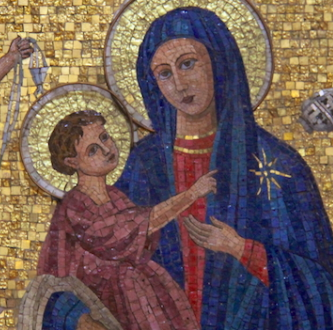
The Incarnation
After participating in this section, I hope you will:
- Appreciate how the debates regarding the Incarnation were initiated by the doctrine of the Holy Trinity.
- Learn about the distinction, broadly, between Antiochene and Alexandrian thought regarding the Incarnation.
- Understand the political context of the debates, and the drive for Christian unity of belief and practice.
The New Testament clearly demonstrates Jesus' humanity. He is shown to sleep, grow weary, sweat, bleed, weep, eat, drink and be joyful. As we learned in the previous session about the definition of the Trinitarian Controversy, it asserted the fully divine status of Jesus as the Son. Debates about the Incarnation stemmed from the question this provokes: How did the Son, who is fully and eternally God, also become human in Jesus Christ?
Our historical timeline picks up where it left off before at the Council of Constantinople.
-
Council of Constantinople
381 CE
As we learned, the Holy Spirit was confirmed as equal to the Father and the Son, fully divine. This council also rejected the idea that Jesus' divine nature had in any way displaced his mind and will.
-
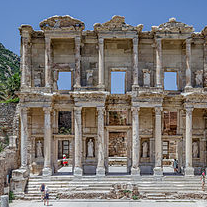
First Council of Ephesus
431 CE
The Council of Ephesus declared false Nestorius's teachings which held that Christ had two separate natures, one human and one divine.
-
Second Council of Ephesus
449 CE
The teachings of the monk Euthches were condemned as they were deemed to be denying the human nature of Christ by claiming that Christ became "more than human".
-
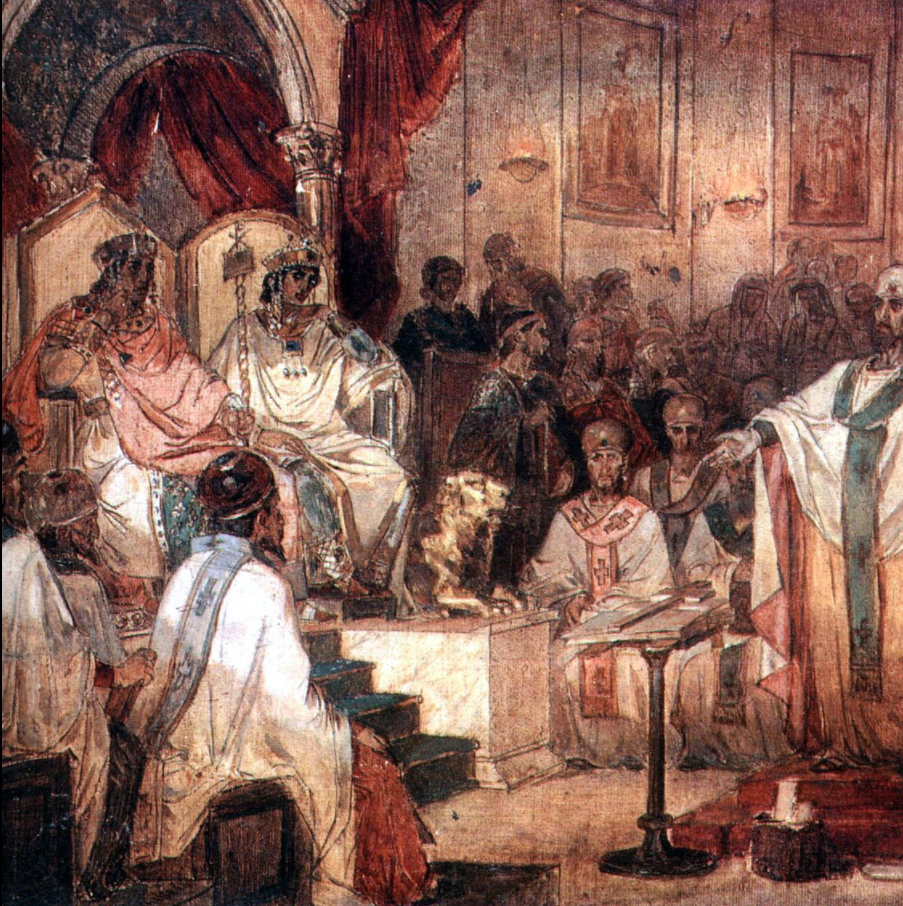
Council of Chalcedon
451 CE
The Council of Chalcedon further refined the definition of Christ's nature by declaring false teachings that Christ only had a single divine nature or that He had any kind of mixture of divine and human natures.
Theological Development of the Incarnation Early Christianity
Logos-Flesh Condemned
- Debate about the nature of Christ continued to wage between the Council of Nicea and the Council of Constantinople.
- In reaction against Arianism, a bishop named Apollinarius proposed that the Son/Logos completely took the place of the mind and soul of the body of Jesus. so far to the extent that it replaced The Logos is the direct subject of human experience. This theorgy is known as the Logos-Flesh model.
- It was alleged that this position implied that Christ only seemed to be human, known as docetism. The Council of Constantinople condemned this position.
Nestorius vs Cyril
- After the Council of Constantinople a Bishop named Nestorius began to claim that Christ had two loosely united natures. In other words, the Son is united to Jesus but they are not of the same nature.
- Nestorius was concerned that theology that joined God and human gave the eternal God a "birthday".
- Along these lines, Nestorius also objected to the honorific title of Theotokos (mother of God) being applied to the Virgin Mary. He proposed that Mary be referred to as Christokos (mother of Christ). His chief concern was not attributing a human creator to God.
- Nestorius was opposed by Cyril of Alexandria.
- Cyril was partially motivated by poltical reasons - he wanted to restore Alexandria's power over other Christian religious centers. Nestorius was an Antiochene priest residing in Constantinople
- Cyril overtly attacked Nestorius's claim that Mary should not be called Christokos, but in doing so also espoused a theology opposed to Nestorius's.
By this time, the sides were (very) roughly split into two "schools".
Alexandrian School
- Stressed the oneness of Christ - the divine and the human are joined together to form one being.
- Personified by Cyril.
- Favored allegorical understandings of scripture, and focused on the inner nature of the Christ.
- Concerned with notions of sanctification.
Antiochene School
- Stressed the distinction of God and man in Christ and the preservation of the two separate natures.
- Personified by Nestorius.
- Favored a factual reading of scripture, and focused on the "historical Jesus".
Chalcedonean Definition
- The debate tended to alternate between shades of the two schools, and the solution in a sense a compromise.
- After Cyril's death, a monk named Eutyches had been teaching that the divine nature of Christ caused Christ to become "more than human". He was condemned at the second Council of Ephesus. As he was useful in the political struggle between Alexandria and Constantinople, a council was called for both political and theological reasons
- The Council of Chalcedon declared the second Council of Ephesus invalid
- The proclamation from the Council of Ephesus regarding Christ only having one nature was nullified.
- A new defintion was produced. Regarding the Incarnation : "(born) of Mary the Virgin Theotokos as to the Manhood; One and the Same Christ, Son, Lord, Only-begotten; acknowledged in Two Natures unconfusedly, unchangeably, indivisibly, inseparably; the difference of the Natures being in no way removed because of the Union, but rather the properties of each Nature being preserved" (Text of Chalcedonaean Definition)
Food for Thought
-
The theological debates regarding the Incarnation were robust and fruitful, but they were also driven for political ends. It was further assumed that God had placed the Roman Emporers, who were responsible for calling the Council, in their steads for the express purpose of calling the Councils and governing the Church. Considering this, how might we approach modern day debates and discourse that may seem based on petty means?
-
Relatedly, the Early Church was very concerned with unity of belief, and that verbal proclamations of faith were unified. Reasons included because during this age, Christianity was heavily focused on missionary activity, and printed medium and literacy was much less widespread. The Christians whose opinions were declared as invalid (heretical) were assumed to be influenced by the devil. It goes without saying that the attitude is much different in most church environments today. Without going so far as deciding that unorthodox opinions holders should be condemned and expelled from the church, might we consider damage that a lack of unity can cause and firmer ways to respond to them in some circumstances?
-
As during the Trinitarian debates, the theological arguments were concerned with salvation. Why was the definition of the Incarnation theologically important? To spur thought on this topic, I could find no better guide than a selection from Saint Athanasius's On the Incarnation:
For being Word of the Father, and above all, He alone of natural fitness was both able to recreate everything, and worthy to suffer on behalf of all and to be ambassador for all with the Father….
He took pity on our race, and had mercy on our infirmity, and condescended to our corruption, and, unable to bear that death should have the mastery— lest the creature should perish, and His Father’s handiwork in men be spent for naught— He takes unto Himself a body, and that of no different sort from ours….
And thus taking from our bodies one of like nature, because all were under penalty of the corruption of death He gave it over to death in the stead of all, and offered it to the Father— doing this, moreover, of His loving-kindness, to the end that, firstly, all being held to have died in Him, the law involving the ruin of men might be undone (inasmuch as its power was fully spent in the Lord’s body, and had no longer holding-ground against men, his peers), and that, secondly, whereas men had turned toward corruption, He might turn them again toward incorruption, and quicken them from death by the appropriation of His body and by the grace of the Resurrection, banishing death from them like straw from the fire.
The Trinity
The Early Church's Spirituality
For being Word of the Father, and above all, He alone of natural fitness was both able to recreate everything, and worthy to suffer on behalf of all and to be ambassador for all with the Father…. He took pity on our race, and had mercy on our infirmity, and condescended to our corruption, and, unable to bear that death should have the mastery— lest the creature should perish, and His Father’s handiwork in men be spent for naught— He takes unto Himself a body, and that of no different sort from ours…. And thus taking from our bodies one of like nature, because all were under penalty of the corruption of death He gave it over to death in the stead of all, and offered it to the Father— doing this, moreover, of His loving-kindness, to the end that, firstly, all being held to have died in Him, the law involving the ruin of men might be undone (inasmuch as its power was fully spent in the Lord’s body, and had no longer holding-ground against men, his peers), and that, secondly, whereas men had turned toward corruption, He might turn them again toward incorruption, and quicken them from death by the appropriation of His body and by the grace of the Resurrection, banishing death from them like straw from the fire.